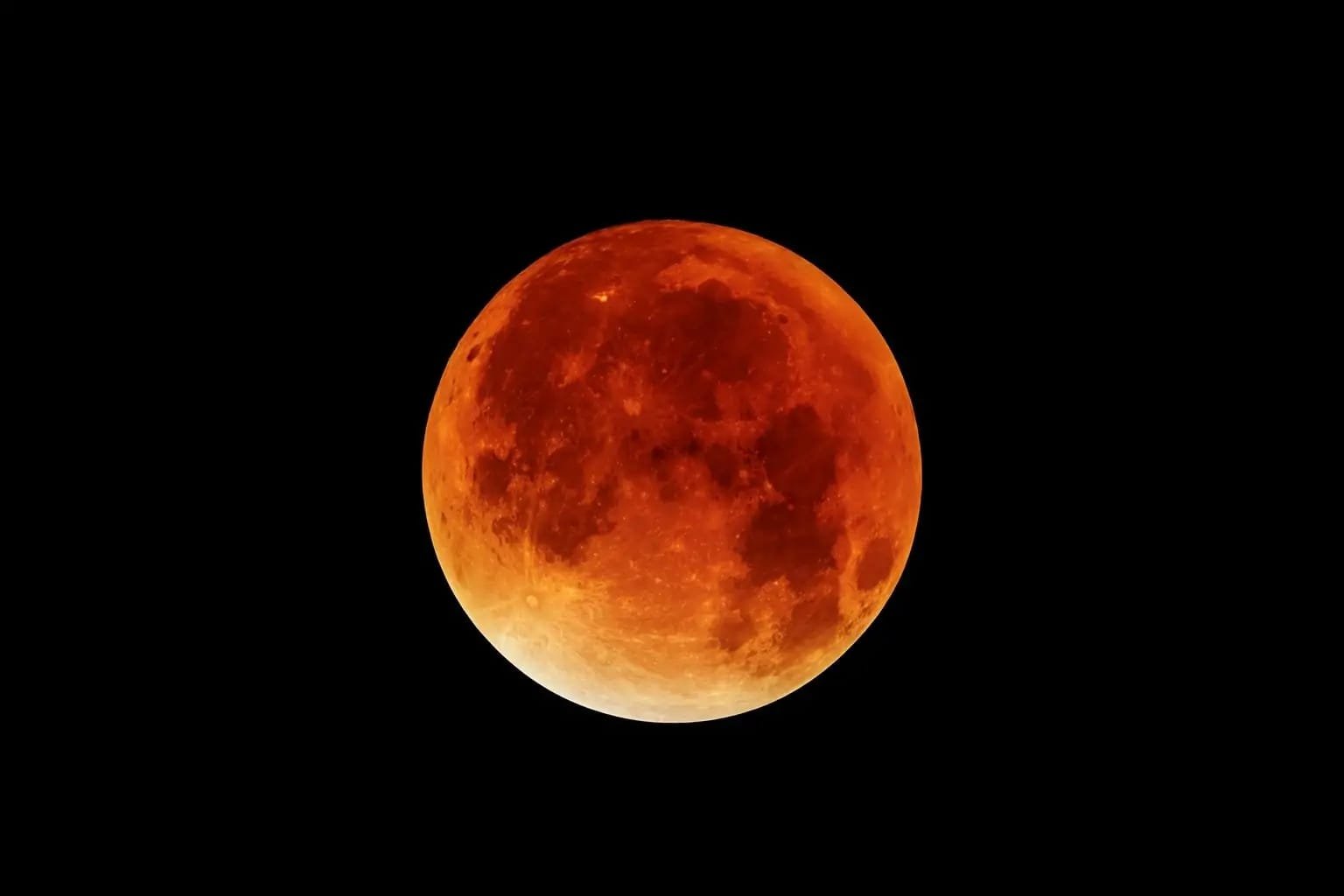
On September 7, billions of people across the Arab and Islamic world, including those in the UAE and Saudi Arabia, will witness a breathtaking total lunar eclipse—the second-to-last of the year.
As the moon takes on a stunning red hue, it brings with it centuries of myths. Common beliefs suggest food becomes unsafe, pregnant women should take special precautions, or that bad luck will follow. However, science confirms these ideas are baseless. The eclipse is simply a natural and awe-inspiring alignment of the Earth, Sun, and Moon.
Astronomers note that this will be among the longest lunar eclipses in recent years, unfolding in distinct phases before reaching its peak.
A breathtaking sight awaits residents across the UAE as the night sky prepares to host a spectacular Blood Moon event. Beginning on the evening of September 7 and lasting until the early hours of September 8, the moon will transform, taking on a deep crimson shade. This natural phenomenon, where Earth’s shadow turns the lunar surface a reddish color, promises a captivating show for all who look to the sky.
Also In This Package
Why September’s Corn Moon is also a ‘Blood Moon’
Why September’s Corn Moon is also a ‘Blood Moon’
‘Blood Moon’ explained: A visual guide to the red glow
How to watch rare blood moon total lunar eclipse in UAE
Throughout history, eclipses have been shrouded in myth and superstition, despite the scientific explanation of the Earth, Sun, and Moon’s alignment. Lunar eclipses, in particular, were seen as harbingers of danger, transformation, or divine interference across many cultures.
- In India, traditions advise people to stay indoors, abstain from cooking, and avoid using sharp objects during an eclipse.
- Aboriginal Australian traditions viewed them as a bad omen, often associating them with sickness or a disruption of balance.
- The Ancient Egyptians imagined the eclipse as a sow devouring the Moon.
- Chinese mythology explained the phenomenon as a celestial dragon taking a bite out of the Moon.
Debunking health and food superstitions
- Eating and cooking – No scientific evidence shows food becomes “poisonous” during an eclipse.
- Exercise – Safe to work out; accidents are unrelated to eclipses.
- Mental health – No direct link to anxiety, sadness, or mood changes.
- Fasting and rituals – These practices hold cultural and religious meaning but lack scientific support.
Frequently asked questions
- Do lunar eclipses contaminate food or water?
No. Science confirms food and water remain unaffected. - Can we eat meat during the eclipse?
Yes. There’s no evidence linking eclipses with food safety. - Does a lunar eclipse have side effects?
No. A lunar eclipse does not impact human health. - What should we avoid during a lunar eclipse?
Nothing — except missing the chance to see it. The blood moon phase, when the Moon glows red, is safe and unforgettable.
The bottom line
A lunar eclipse is simply the Earth’s shadow falling on the Moon. It is one of the most striking spectacles in the night sky — and completely safe. For families in the UAE and beyond, September 7 is a chance to step outside, look up, and enjoy the Moon turning red: a natural wonder to be admired, not feared.
Ashik Islam, Special correspondent